
Life in Northern Adelaide can move fast. Between school, work, sport, and family commitments, it is easy to let dental care slip. Yet a few simple habits can protect your family’s teeth without adding much extra time to the day.
If you live around Salisbury, Paralowie, Elizabeth, or nearby suburbs, you probably spend a lot of time on the road or at local sports grounds. Long days and quick meals can make it harder to keep up with brushing and check-ups. This guide shares practical dental health tips for busy families in Northern Adelaide, and shows how a local clinic like Parabanks Dental can support you with realistic solutions.
A quick look at family life in Northern Adelaide and Salisbury: busy schedules, mixed age groups, and why oral health often slips down the list.
Northern Adelaide is home to many young families, single‑parent households, and multi‑generation homes. You might have little ones at primary school, teens at high school, and older relatives all under one roof. With so many needs to juggle, dental appointments can drop behind sport, homework, and work shifts. Shortcuts like drive-through dinners and sugary drinks on the go can also creep in. Recognising this pattern is the first step to making small, manageable changes for better oral health.
What good daily dental care looks like in real life: simple habits that fit into a busy family routine.
Good daily dental care does not need to be complicated. At its core, it means brushing twice a day with fluoride toothpaste, cleaning between teeth daily, and drinking plenty of water. Children need help or supervision with brushing until at least age eight to make sure they reach every surface. Adults benefit from the same basic routine, with extra focus on gumline cleaning and gentle brushing. If you keep these core habits in place, you already cut the risk of decay and gum disease for your whole family.
Time-saving brushing tips for parents and kids: two-minute routines, using timers, and making brushing a family habit.
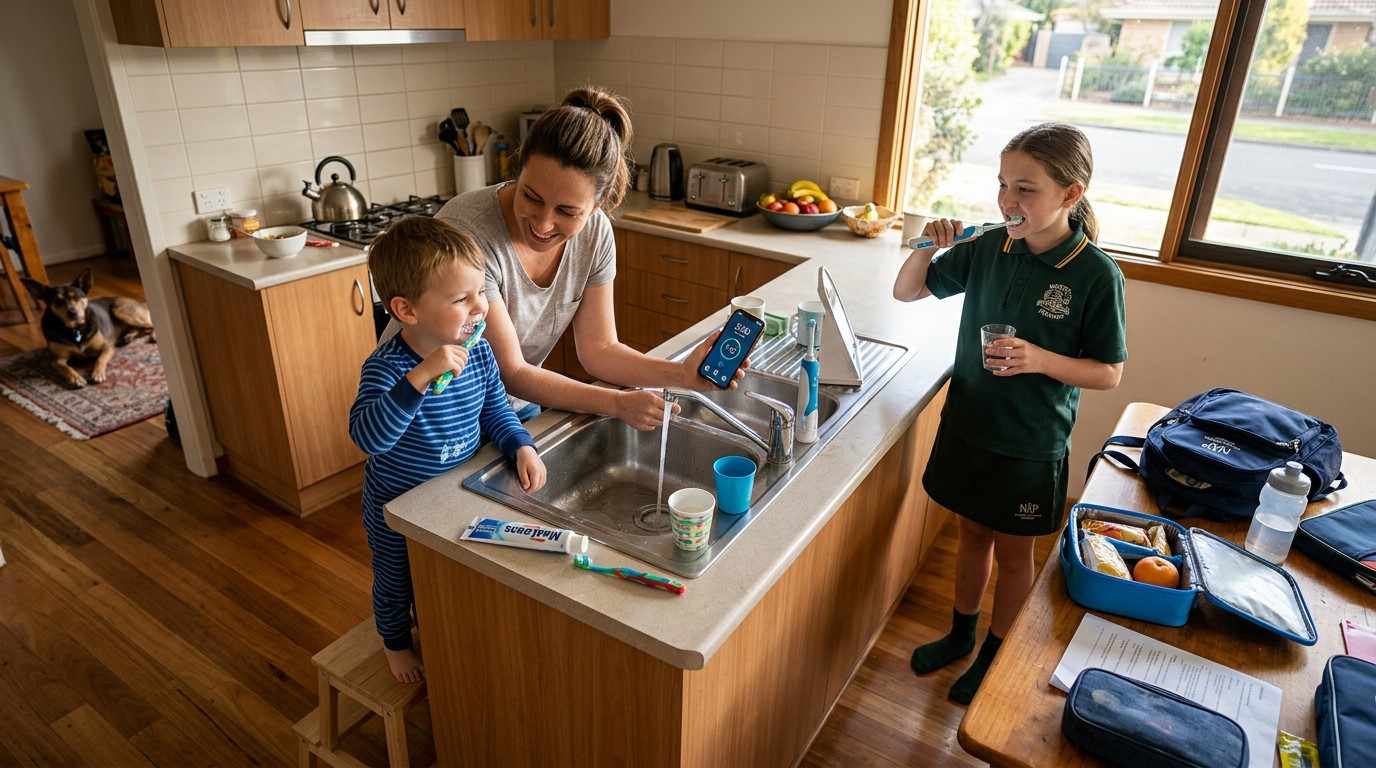
You can keep brushing on track even on busy mornings and evenings by building it into your family routine. Aim for two minutes twice a day, using a timer, phone app, or favourite song to keep time. Younger kids often do better if you brush your teeth alongside them so they copy your actions. For very busy mornings, you might do a quick supervised brush before school and a more careful brush at night. Keeping toothbrushes and toothpaste in an easy-to-reach spot, with spares for unexpected sleepovers or late nights, also helps.
Flossing and cleaning between teeth: how to make it realistic for children, teens, and adults with tight schedules.
Flossing can feel like a big ask, but it is important for cleaning the 30–40% of tooth surfaces that a brush misses. For children, you can start flossing the teeth that touch once they have two teeth side by side, using floss holders if that makes it easier. Teens and adults may prefer floss picks or interdental brushes if regular floss is hard to use. You do not need to floss at a set time, as long as you do it once a day; some families find it easier to floss while watching TV or winding down, then brush before bed. The key is consistency rather than perfection.
Smart snack and drink choices for busy days: lunchboxes, after-school snacks, and sports drinks that are kinder to teeth.
Food and drink choices have a big impact on dental health, especially when you grab snacks on the go. Frequent sugary snacks and drinks feed bacteria that cause decay. You can protect your family’s teeth by limiting sugary snacks to mealtimes and choosing tooth‑friendlier options between meals, such as cheese, nuts (if age appropriate), plain yoghurt, and whole fruit instead of fruit juice. For school and after-school activities, pack water as the main drink, and keep sports drinks for rare occasions, if at all. Rinsing with water after eating and avoiding long sipping on sweet drinks can also help.
Making the most of fluoride: tap water, fluoride toothpaste, and professional fluoride treatments for higher-risk family members.
Fluoride is a safe and important tool for preventing tooth decay. Most people in South Australia benefit from fluoride in tap water, which helps strengthen enamel. At home, you should use a fluoride toothpaste twice a day: a smear for under‑3s, a pea‑sized amount for older children, and a standard amount for adults, unless your dentist advises otherwise. Try to spit out excess foam instead of rinsing, so some fluoride stays on the teeth. For higher‑risk family members, such as children with frequent decay, people with dry mouth, or those with medical conditions, your dentist may suggest professional fluoride treatments at check-ups.
How to fit regular dental check-ups into a packed calendar: combining family appointments and planning around school and work.
Regular check-ups help catch problems early and keep costs down, but they do need some planning. You can make life easier by booking family appointments together, such as back‑to‑back slots for parents and children in one visit. Many families prefer late afternoon or Saturday appointments to avoid missing school. You can ask your dentist to set recalls for the same time each year or every six months, then add them straight into your digital calendar. Practices like Parabanks Dental are used to working with busy families and can suggest times that suit school terms and work rosters.
Dental health tips for kids and teens in sport: mouthguards, hydration, and what to do after a knocked-out or chipped tooth.
Sport is part of life in Northern Adelaide, from weekend footy and netball to skate parks and school events. Unfortunately, it is also a common source of chipped and knocked-out teeth. A custom sports mouthguard from a Salisbury dentist gives better protection and comfort than off‑the‑shelf versions, and kids are more likely to wear it. Encourage water as the main drink before, during, and after training instead of sports drinks. If a tooth is knocked out, pick it up by the crown, gently rinse off visible dirt, and either place it back in the socket or store it in milk. Then contact an emergency dentist in Salisbury straight away.
Supporting vulnerable family members: young children, older adults, people with medical conditions, and Aboriginal and Torres Strait Islander families.
Some family members face extra challenges with oral health. Young children depend on adults for brushing and food choices. Older adults may struggle with manual brushing, dry mouth, or denture care. People with conditions such as diabetes, heart disease, or sleep apnoea can have higher oral health risks and may need closer monitoring. It is also important to recognise the specific needs of Aboriginal and Torres Strait Islander families and work with services that respect culture and community. Resources like Parabanks Dental’s Aboriginal and Torres Strait Islander oral health page and sleep apnoea treatment information in Salisbury can support this.
Digital tools and reminders that help Northern Adelaide families stay on track with brushing and appointments.
Technology can make dental care easier rather than harder. Many families use smartphone alarms or calendar reminders to prompt brushing and flossing. Brushing apps and electric toothbrushes with built‑in timers are especially helpful for children and teens. You can also sign up for email or SMS reminders from your dental clinic so you do not miss check-ups. Some practices share oral health tips on their website or social media, such as Parabanks Dental’s guides for families in Paralowie and Salisbury North and regular dental visits for Elizabeth families.
How using local resources, such as SA Dental programmes and nearby family dentists, keeps care practical and affordable.
You do not have to manage dental care alone as a parent. SA Dental programmes and South Australia’s Oral Health Plan encourage early checks and prevention for children and vulnerable groups. You can access public care for eligible kids and in some cases adults, while using a local family dentist for flexible appointments or wider services. Combining public support with care from a nearby practice like Parabanks Dental can make dental care more affordable and practical. This approach helps you keep up with check-ups instead of relying on emergency visits.
How a local family dentist near Parabanks (like Parabanks Dental) can partner with you to create a realistic, long-term dental health plan for your busy household.
The right local dentist becomes part of your support network. A family-focused clinic near Parabanks can help you plan check-ups around school holidays, coordinate appointments for siblings, and adjust recall intervals based on risk. They can also guide you through options like the Child Dental Benefits Schedule in Salisbury, payment plans, and treatment choices ranging from general dentistry to restorative care and cosmetic dentistry. Practices like Parabanks Dental encourage you to take an active role in your treatment, which means your plan suits your real life rather than an ideal schedule.