
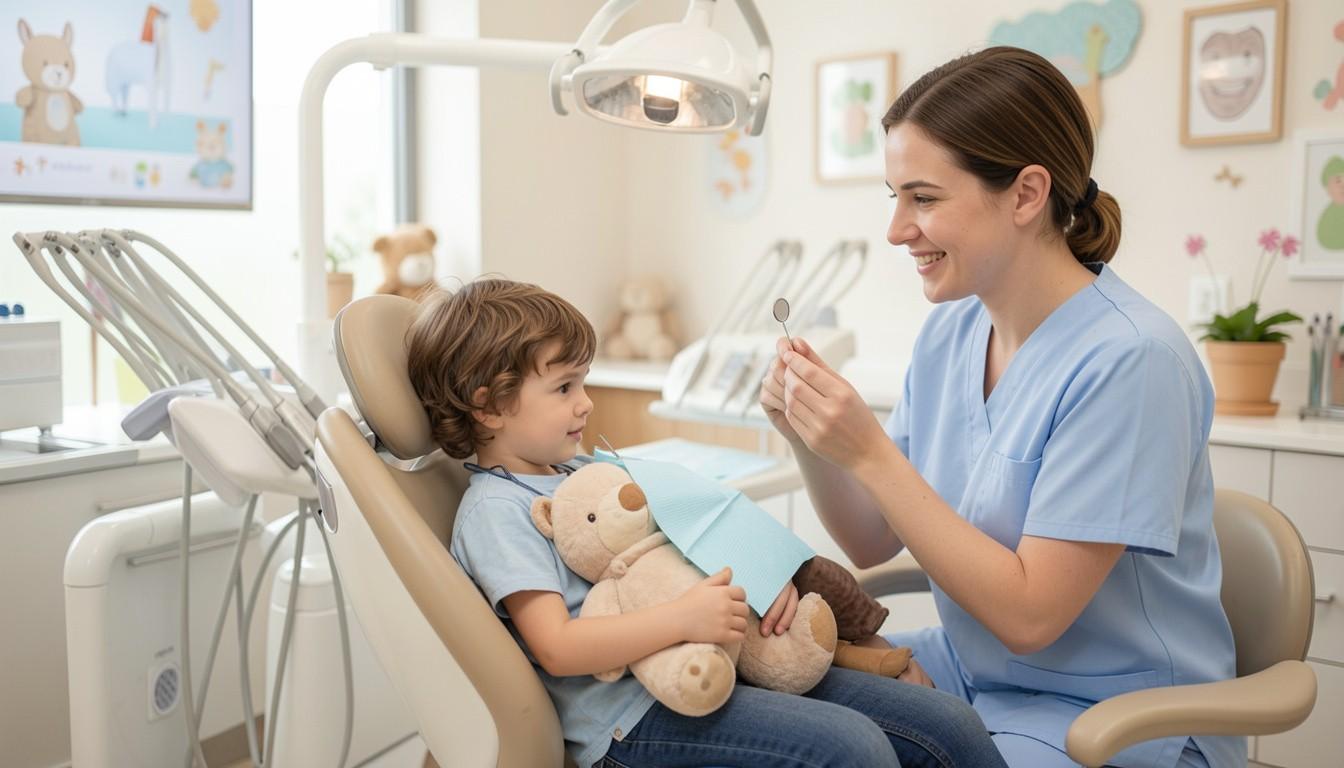
Your child’s first dental visit sets the tone for how they feel about dentists for years. With a bit of planning, you can turn it from something scary into something simple and even positive.
If you live near Salisbury, Paralowie, Elizabeth, Mawson Lakes, or Para Hills, you have access to family-friendly dentists who see young children every day. The way you prepare your child affects how calm they feel in the chair and how smoothly the appointment runs. A local clinic like Parabanks Dental can support you through this first step and then continue regular care as your child grows.
When should your child have their first dental visit, and why Australian guidelines suggest “first tooth or by age one”.
Australian and international guidelines recommend that your child see a dentist when their first tooth appears or by their first birthday, whichever comes first. This might sound early, but it lets the dentist check how teeth and gums are developing and pick up any early concerns. It is also a chance for you to ask questions about feeding, dummy use, and brushing, while habits are still forming. If your child is older than one and has not seen a dentist yet, it is still worth starting now; you simply treat the next visit as their first and focus on a calm, positive experience.
Why preparation matters: how a child’s first experience at the dentist affects future check-ups, anxiety, and oral health.
Children build strong memories from first experiences. A gentle, well-prepared first dental visit makes it easier to attend regular check-ups later and reduces anxiety about treatment. On the other hand, a rushed or scary first visit can make future appointments harder for both you and your child. Good preparation helps your child feel safe, helps the dentist work more effectively, and can reduce the chance of behaviour struggles that lead to incomplete exams. Over time, this early positive experience supports better oral health and fewer dental emergencies.
Talking about the dentist in a positive way: simple language, what to say, and what to avoid saying before the visit.
The words you use matter. Try simple, upbeat phrases like “The dentist will count your teeth and make sure they are strong and healthy.” You can describe tools in child-friendly ways, such as “a tiny mirror” or “a special toothbrush.” Avoid negative words like “hurt,” “needle,” or “pull,” even if you use them in a reassuring way, because children tend to focus on the scary part. It also helps to avoid sharing your own bad experiences or using the dentist as a threat (“If you eat sweets, the dentist will…”). Keep your tone calm and matter-of-fact so your child sees the visit as a normal part of health care.
Using books, videos, and play to make the dental visit feel familiar (role-play, storybooks, and pretend games at home).
Children cope better with new situations when they feel familiar. You can read picture books about going to the dentist, watch short child-friendly videos, or set up a pretend dental clinic at home with toys. Let your child be the dentist and “check” your teeth or a teddy’s teeth so they feel in control. You might count their teeth on your lap and show them how they will open wide. By turning the idea into a game, you reduce fear and help them understand what will happen at the real appointment.
Choosing the right time and day for the appointment: naps, meals, and why mornings often work best for young children.
Timing can make or break a first visit. Try to book when your child is usually at their best, which for many young children is the morning after breakfast. Avoid times close to nap time or late in the day when they are tired and less patient. A small, light meal before the appointment can help avoid hunger grumpiness, but skip sticky snacks and heavy drinks right before the visit. If you have more than one child, you might book the calmer or more confident child first so the younger one can watch how it works.
What to do in the week before the appointment: brushing routines, talking through what will happen, and planning the day.
In the week leading up to the appointment, keep routines simple and consistent. Brush your child’s teeth twice a day and let them practise opening wide while you gently clean. Talk briefly each day about what will happen: “Next Tuesday, we are going to see the dentist. They will look at your teeth and count them.” You can mark the date on a calendar or show the appointment reminder on your phone so it does not feel like a surprise. It also helps to plan your travel route and allow extra time so you are not rushed or stressed on the day.
What to bring on the day: comfort items, health information, and practical things that keep your child settled in the waiting room.
A few simple items can keep the day running smoothly. Bring a comfort item like a favourite toy, blanket, or book for your child to hold in the waiting room and in the chair if the dentist agrees. Pack your child’s Medicare card, any allergy or medication details, and, if you have them, previous medical reports that might affect care. A snack and water bottle for after the appointment is helpful, especially if you need to wait for a short time. You might also bring a list of questions you want to ask, such as brushing tips or diet advice.
What usually happens at a child’s first dental visit in an Australian family practice, including for families near Salisbury.
At a typical first visit, the dentist will first chat with you about your child’s health, feeding habits, and any concerns you have. They then gently examine your child’s teeth, gums, and bite, often with your child sitting on your lap. In many cases, there are no drills or injections; the main focus is on checking development and giving you advice on brushing, fluoride, and diet. If your child is calm, the dentist may show them the mirror and “count” their teeth out loud. For families near Salisbury, a practice like Parabanks Dental can include your child in the wider family check-up routine so visits feel normal from early on.
How to support your child during the appointment: staying calm yourself, where you sit, and how to respond if they cry or resist.
Children look to you for cues. If you stay calm, speak gently, and smile, they are more likely to feel safe. Many dentists will invite you to sit in the room, and for smaller children you may hold them on your lap while the dentist examines their mouth. If your child cries or resists, try not to apologise for them or tell them off; instead, stay close, hold their hand, and let the dentist guide you on the next steps. You can say simple phrases like “You’re doing well,” or “We are nearly done,” to reassure them. Even if the dentist cannot complete everything at the first visit, staying calm helps build trust for the next time.
Special tips for children who are very anxious, have sensory sensitivities, or have had a difficult medical experience before.
Some children need extra support. If your child is very anxious, has sensory sensitivities such as dislike of bright lights or certain sounds, or has had a tough medical experience before, mention this when you book. The practice may be able to offer a longer appointment, a quieter time of day, or a “get to know the clinic” visit where your child just meets the team and looks around. You can bring sensory comfort items like noise-cancelling headphones or sunglasses if your child finds them helpful. Over time, a consistent relationship with a gentle, patient dentist can reduce fear and make appointments more manageable.
Using local support in Salisbury SA: Child Dental Benefits Schedule, children’s dental services, and choosing a family dentist who welcomes young children.
Cost and access can also shape how you feel about booking that first appointment. Many Salisbury families can use the Child Dental Benefits Schedule to help cover basic services for eligible children. Public children’s dental services and SA Dental clinics support kids under 18, while private family practices offer flexible times and the option to see the same dentist each visit. When you choose a family dentist, check that they clearly welcome young children and offer information like when your child should first visit a dentist and dental care tips for busy families in Northern Adelaide. Clinics like Parabanks Dental work with many young families around Salisbury and understand the local support options.
How to make future visits easier: praise, simple rewards, and keeping regular check-ups as a normal part of family health.
What you do after the appointment matters as well. Offer plenty of praise for your child’s effort, even if they were upset at times. You can use simple, non-food rewards like a sticker, an extra story at bedtime, or choosing a game when you get home. Try to talk about the visit in a positive way in the days after, focusing on what went well. Booking the next check-up before you leave the clinic helps turn dental visits into a standard part of family health, like seeing the GP or going for vaccinations. As your child gets used to the routine, visits usually become quicker and easier.