
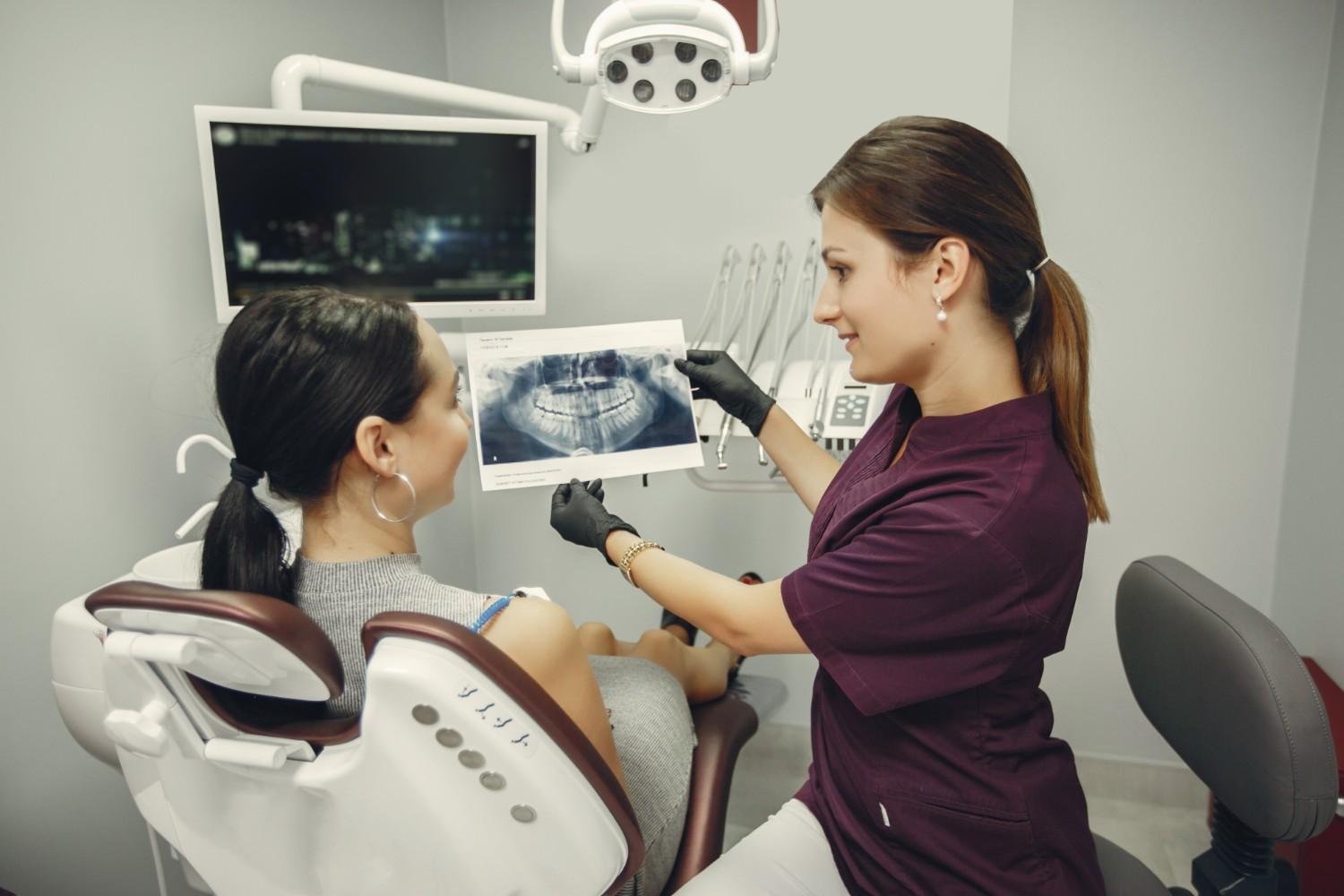
You sit down for your check-up in Salisbury, and your dentist says, “We’ll take some X-rays today.” You might instantly think, “Do I really need them?” and “Are they safe for me and my kids?” Dental X-rays help your dentist see problems you cannot see in a mirror, like decay between teeth, infections in the roots, and bone loss around your teeth. Modern digital X-rays use very low radiation, and current Australian and international guidelines say they are safe when used sensibly and only when they add value.
What Are Dental X-Rays and Why Do Dentists Use Them?
What a dental X-ray actually shows
A dental X-ray is a picture of your teeth, roots, and the bone that supports them. It lets your dentist see under fillings, inside the tooth and jawbone, and between teeth where the naked eye cannot reach. It also shows your sinuses, jaw joints, and the position of unerupted or impacted teeth.
Why a visual exam is not enough
Even with good lighting and a mirror, your dentist cannot see everything. Decay can hide between teeth, under old fillings, or deep inside grooves. Infections at the root tip, small cysts, and bone loss around teeth often show only on X-rays. Without X-rays, your dentist may miss early disease until it becomes painful and more expensive to fix.
How X-rays support accurate planning
X-rays guide many treatments. They help your dentist decide the size and depth of fillings, plan root canal therapy, and check whether there is enough bone for dental implants. They also support planning for dentures, crowns and bridges, and orthodontics.
Why X-rays can save money over time
X-rays help find problems early, before they turn into abscesses, broken teeth, or tooth loss. Early fillings usually cost less and last longer than emergency root canals or extractions, so X-rays often reduce long-term dental bills for families in northern Adelaide.
Types of Dental X-Rays You Might Have in Salisbury
Bitewing X-rays
Bitewings are small images that show the crowns of the upper and lower back teeth at the same time. You bite gently on a tab while the sensor sits between your teeth. These X-rays reveal decay between teeth and help monitor bone levels for gum disease.
Periapical X-rays
Periapical X-rays focus on one or two teeth from crown to root tip. They show the full root, the surrounding bone, and any abscess or cyst. Dentists use them when you have local pain, after trauma, or when planning root canal treatment.
Panoramic X-rays (OPG)
A panoramic X-ray, often called an OPG, shows all your teeth, upper and lower jaws, sinuses, and jaw joints in a single image. You stand in a machine while an arm rotates around your head. Dentists use OPGs to assess wisdom teeth, growth in teenagers, jaw problems, and more complex cases.
Cone beam CT and other imaging
Cone beam CT provides 3D images and is useful for complex implant planning, some root canal cases, and detailed jaw assessments. Because the dose is higher than for standard dental X-rays, guidelines say it should be used only when 2D X-rays do not give enough information.
When and How Often Do You Really Need Dental X-Rays?
Individualised recall instead of fixed schedules
There is no single rule such as “everyone needs X-rays every year.” Your dentist looks at your decay risk, gum health, age, and past history to decide how often to recommend them. Low-risk patients need them less often than those who regularly get new cavities or have gum disease.
Typical intervals
For low-risk adults and children, bitewings may be taken every one to three years to check between teeth and monitor bone. If you have a high risk of decay, a lot of fillings, or gum disease, your dentist may suggest more frequent images.
When extra X-rays are needed
Your dentist may take extra X-rays when you join the practice as a new patient, when you have pain or swelling, after injury, or before larger treatments like implants or major restorative work. These X-rays help confirm the diagnosis and prevent surprises during treatment.
How your Salisbury dentist makes the call
At Parabanks Dental, we weigh the benefit of each image against your overall exposure, following current guidelines and best practice. We aim to use the fewest X-rays needed to give safe, high-quality care for you and your family.
How Much Radiation Do Dental X-Rays Use?
Understanding dose in simple terms
Radiation dose is measured in microsieverts (µSv). Everyone receives radiation every day from natural sources such as soil, air, food, and sunlight. This is called background radiation.
Typical doses for dental X-rays
Modern digital dental X-rays have very low doses. A single small digital X-ray or bitewing usually gives a dose in the range of about 0.3 to 5 µSv, depending on equipment and settings. A panoramic X-ray is still low, but typically a little higher than a small X-ray.
Everyday comparisons
To put this in context, many sources estimate that you receive about 8–10 µSv per day from natural background radiation alone. That means a single digital dental X-ray is often similar to or less than one day’s normal exposure. A flight from Adelaide to Sydney exposes you to more radiation than a typical bitewing series.
Key safety message
For most people, the radiation from dental X-rays is very low and the health risk is considered minimal, especially compared with the risk of missing serious dental problems. Safety measures and modern equipment push the dose even lower.
Are Dental X-Rays Safe for Children, Pregnant Women, and Other Sensitive Groups?
Children
Children are more sensitive to radiation than adults, but they also benefit greatly from early detection of decay and growth issues. Guidelines confirm that dental X-rays are safe for children when used carefully and only when necessary. They help pick up cavities between baby teeth and adult teeth, spot missing or extra teeth, and guide orthodontic planning.
Pregnancy
Current evidence and guidelines state that dental X-rays can be safely performed during pregnancy when they are clinically needed and when the dentist uses modern equipment and proper precautions. Because the X-ray beam focuses on the mouth, and doses are low, the baby receives tiny exposure. In some cases, non-urgent images may be postponed until after pregnancy, but urgent dental problems should not be left untreated.
Breastfeeding and fertility
Mouth-focused dental X-rays do not affect breast milk, fertility, or reproductive organs. The beam is aimed at your mouth, and scatter to other parts of the body remains very low.
Patients with other medical conditions
If you have had previous radiation therapy, cancer treatment, or other complex medical issues, your dentist may speak with your GP or specialist before ordering extra scans. Even then, they follow strict safety guidelines and keep exposures as low as reasonably possible.
How Do Modern Dentists Keep X-Rays as Safe as Possible?
The ALARA principle
Dentists follow the ALARA principle—“as low as reasonably achievable”—which means they use the smallest number of X-rays at the lowest dose that still provides clear diagnostic images. They avoid routine “just in case” imaging and focus on genuine need.
Digital sensors and dose reduction
Modern digital sensors are more sensitive than old film, so they need less radiation to create clear pictures. This reduces dose for every patient and lowers the chance of needing repeat images due to poor quality.
Collimation, filtration, and positioning
X-ray machines have collimators and filters which shape and limit the beam so it covers only the area needed. Careful positioning of the sensor and the beam further cuts down accidental exposure to other tissues.
Lead aprons and thyroid collars
Because modern dental X-ray doses are so low and focused, many recent reviews say lead aprons and thyroid collars are not always necessary. However, some dentists still use them for your peace of mind or in certain cases. If you prefer extra shielding, you can discuss this with your dentist.
Benefits vs Risks: Why X-Rays Are Worth It When Used Well
Early detection of problems
X-rays help your dentist find decay between teeth, cracks under old fillings, and bone loss before these issues become painful or cause tooth loss. Early treatment usually means smaller fillings, less invasive procedures, and fewer emergencies.
Avoiding bigger treatment later
By catching problems early, X-rays may prevent you from needing root canal therapy, extractions, implants, or dentures later. This not only protects your teeth but also reduces cost and time in the chair.
Planning precise treatment
For implants, root canals, orthodontics, and restorative dentistry in Salisbury, X-rays are essential. They allow your dentist to choose correct angles, lengths, and positions so treatment is safer and more predictable.
Benefits outweigh risks
When X-rays are used with current guidelines and modern technology, the diagnostic and long-term health benefits clearly outweigh the very small radiation risks for almost all patients. The key is thoughtful, case-by-case use.
What to Expect During a Dental X-Ray at a Salisbury Practice
Step-by-step for small X-rays
For bitewing or periapical X-rays, the dentist or nurse places a small sensor or plate in your mouth and asks you to bite down gently. You hold still for a second while the machine takes the image. You may feel light pressure but no pain.
Taking a panoramic X-ray (OPG)
For a panoramic image, you stand in the machine, place your teeth on a small bite peg, and rest your head in supports. The arm then rotates around your head for about 10–20 seconds. You do not feel anything from the X-ray itself.
How long it takes
Most X-ray procedures take only a few minutes from setup to completion. Digital images appear almost immediately on the screen, so your dentist can show you what they see and explain next steps. At Parabanks Dental, we often review images chairside so you can ask questions as we go.
How Parabanks Dental explains each step
We tell you exactly what we are doing, why we are doing it, and how it benefits your care. This helps you feel more comfortable and supports you to take an active role in your treatment.
Dental X-Rays and Costs for Salisbury Families
Typical fees
In Australian private practice, dental X-rays are usually billed per image or as part of a check-up package. Fees vary between clinics, but small digital X-rays often sit in a modest range, and panoramic images cost a bit more. Your dentist can give you exact figures before treatment.
How private health extras help
Many dental extras policies cover part or all of the cost of X-rays, especially during routine check-ups. Early detection through X-rays can reduce bigger treatment bills later, which makes them a sensible investment.
Public dental options
Eligible patients can access public dental clinics where fees for X-rays and treatment are capped or reduced, though waiting times for non-urgent care may be longer. For urgent problems, public services still use X-rays to assess and triage your case.
How Parabanks Dental supports your budget
At Parabanks Dental, we use clear quotes and payment plans so you understand the cost of X-rays and treatment upfront. Our goal is to make necessary imaging and care accessible without surprise bills.
How Parabanks Dental Uses X-Rays Safely and Sensibly
Evidence-based use, not automatic
We do not take X-rays “just because it is time.” We base each decision on your current needs, your risk level, previous images, and the information we need to treat you safely.
Modern digital imaging and dose reduction
We use modern digital equipment and dose-control settings to keep exposure low while still getting clear, useful images. This supports safer care for both adults and children.
Clear explanations and shared viewing
We show you your X-rays on screen and explain what we see, where any problems are, and what your options look like. This supports you to take an active role in your treatment and feel confident in each decision.
Respect for your preferences and community needs
We respect your questions about radiation and will always discuss alternatives and timing where possible. We also provide information for different communities, including resources for Aboriginal and Torres Strait Islander patients, so you feel heard and understood.
If you live near Salisbury and you still have questions about why your dentist recommends X-rays or how they fit into your family’s care, you can contact Parabanks Dental to talk through your situation and get advice that fits your needs and comfort level.