
Baby teeth might look small, but they have a big job to do. If you live near Salisbury, SA, understanding why baby teeth matter helps you protect your child’s smile from the very start.
Many parents assume that baby teeth are less important because they “fall out anyway.” In reality, they affect how your child eats, speaks, grows, and even how their adult teeth line up later. A family‑focused clinic like Parabanks Dental can help you care for baby teeth from the first tooth through to the start of adult teeth, so your child has the best start possible.
What baby teeth are and when they usually appear, including typical teething and eruption milestones for Australian children.
Baby teeth, also called primary teeth, usually start to appear around six to ten months of age. The front teeth at the bottom and top come first, followed by molars at the back over the next couple of years. Most children have a full set of 20 baby teeth by about three years of age, although every child is a little different. These teeth then stay in place for several years before adult teeth gradually replace them from around age six onwards.
Why baby teeth matter for chewing, nutrition, and healthy growth in the early years.
Baby teeth let your child chew and enjoy a wider range of foods as they move from milk to family meals. If teeth are missing or painful, children may avoid certain textures, which can limit nutrition. Good chewing helps jaw muscles develop properly and supports healthy digestion. When baby teeth stay strong and healthy, your child can eat comfortably, grow well, and enjoy mealtimes with less fuss.
How baby teeth support speech development, facial growth, and your child’s confidence when smiling and talking.
Baby teeth play a key role in speech. Your child uses their front teeth and tongue together to form sounds like “s,” “t,” and “f,” so missing or damaged teeth can affect clarity. Baby teeth also support the lips and cheeks, helping the face grow in a balanced way. On top of that, a complete, healthy baby smile makes children feel more confident when they talk, laugh, and appear in photos. Protecting baby teeth therefore supports both development and self‑esteem.
The role of baby teeth in guiding adult teeth into place and preventing crowding and orthodontic problems later.
Baby teeth hold space for the adult teeth growing underneath the gums. They act like natural placeholders, guiding adult teeth into roughly the right position when it is time to erupt. If a baby tooth is lost too early because of decay or trauma, neighbouring teeth can drift into the gap. This can block the path for adult teeth and lead to crowding or misalignment, which may mean more orthodontic treatment later. Keeping baby teeth healthy helps adult teeth come through more smoothly and can reduce the chance of needing braces.
What happens if baby teeth get cavities or are lost too early (pain, infections, hospital visits, and long-term effects on adult teeth).
Cavities in baby teeth are not harmless. They can cause pain, infections, abscesses, and disturbed sleep, and they can make eating and speaking difficult. In some cases, untreated decay leads to hospital visits for extractions under general anaesthetic, which is stressful for both children and parents. If baby teeth are removed early, it can also affect how adult teeth erupt, as mentioned earlier. Over time, this can increase the need for fillings, crowns, or orthodontics in the permanent teeth.
Early childhood caries in Australia: what recent data show about tooth decay in young children and why South Australian kids are at risk.
Research in Australia shows that early childhood caries (tooth decay in young children) is still common, especially in areas with higher social and financial stress. In South Australia, reports highlight significant numbers of young children needing dental treatment in hospital for preventable decay. Factors such as frequent sugary snacks, sweet drinks in bottles and sippy cups, and limited access to early dental visits contribute to this pattern. For families around Salisbury, this means that paying attention to baby teeth from the start can have a real impact on your child’s health and comfort.
When to start cleaning baby teeth and what good home care looks like for babies and toddlers (wiping gums, first toothbrush, fluoride toothpaste).
You can start caring for your child’s mouth even before the first tooth appears by gently wiping the gums with a soft, clean cloth. Once the first tooth comes through, you should start brushing twice a day with a small, soft toothbrush. Use plain water or a smear of age‑appropriate fluoride toothpaste at first, and follow your dentist’s advice as your child grows. Sit or stand behind your child, gently support their chin, and brush all surfaces, especially where teeth meet the gums. Your child will need help with brushing until at least age eight to ten, as young hands do not have the control to clean well.
First dental visits for babies and toddlers: “first tooth or by age one” and why early checks help prevent bigger problems.
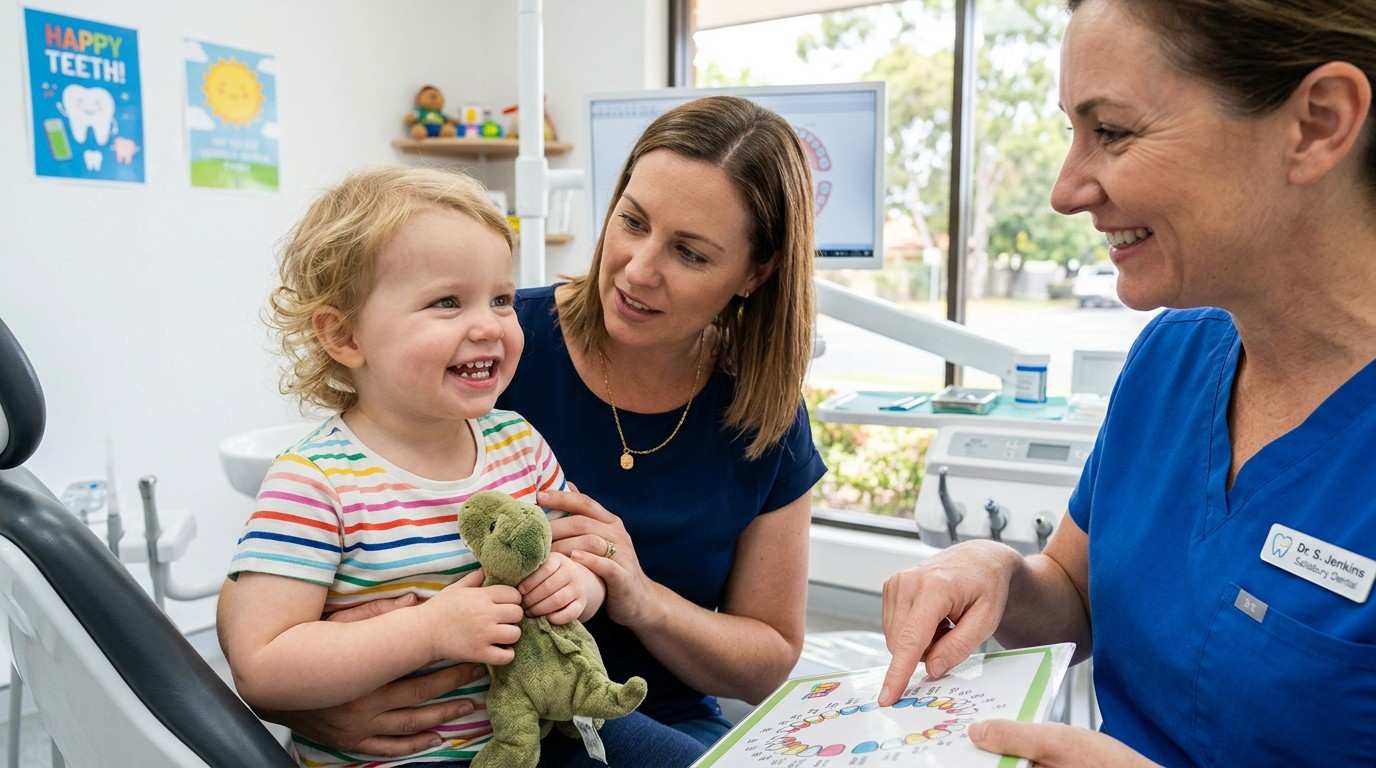
Guidelines suggest that you book your child’s first dental visit by the time their first tooth appears or by their first birthday. This early visit lets the dentist check for early signs of decay, assess risk factors, and give you personalised advice on feeding and cleaning habits. It also helps your child get used to the dental environment before they ever feel pain. Families in Salisbury can read more about timing and what to expect in guides like when your child should first visit a dentist. Starting early with a family dentist such as Parabanks Dental makes ongoing care smoother.
Everyday habits that protect baby teeth: diet, bottles and sippy cups, dummies, and managing sugar in snacks and drinks.
Daily habits have a big effect on baby teeth. Limiting sugary snacks and drinks, especially between meals, reduces the fuel for decay‑causing bacteria. Offer water as the main drink between meals and avoid putting your child to bed with a bottle of milk or juice, as this bathes teeth in sugar overnight. If your child uses a dummy, do not dip it in sugary liquids. Focus on whole foods like fruit, vegetables, cheese, and yoghurt rather than frequent processed snacks. These simple changes support the brushing you do and help keep baby teeth healthy.
Baby teeth and local support in Salisbury SA: Child Dental Benefits Schedule, SA Dental, and choosing a family dentist who sees young children.
You do not need to manage baby teeth alone. Many families in Salisbury can use the Child Dental Benefits Schedule for kids’ check-ups, which helps cover routine visits and treatment for eligible children. SA Dental also provides services for children under 18, while private family practices offer flexible appointment times and continuity of care. When you choose a dentist, look for a clinic that regularly sees babies and toddlers and shares resources on topics like preparing your child for their first dental visit and dental health tips for busy families in Northern Adelaide. A practice like Parabanks Dental supports families from Paralowie, Salisbury North, Elizabeth, Mawson Lakes, and Para Hills with this kind of early care.
How looking after baby teeth today can save your family money, time, and stress on dental treatment in later childhood.
Investing a little time in baby teeth often saves money and stress later on. Regular brushing, healthy snacks, and early check-ups are all low‑cost steps. In contrast, fillings, extractions under general anaesthetic, orthodontics, and missed school or work days all add up. Studies show that early intervention and prevention reduce the need for more complex dental treatment as children grow older. By protecting baby teeth now, you give your child a healthier smile and spare your family many avoidable appointments in the future.