
You watch your five-year-old enthusiastically scrub their teeth for exactly 12 seconds before declaring the job done, and you wonder—are they actually cleaning anything, or just spreading toothpaste around? Most children don’t develop the motor skills to brush effectively until around age 8, meaning parents play a critical role in teaching proper technique and supervising daily oral care. For families in Salisbury, Paralowie, Parafield Gardens, and surrounding areas, establishing these habits early prevents the tooth decay that affects one in four Australian children. Teaching proper brushing and flossing takes patience, consistency, and the right approach for your child’s age and abilities, but the investment pays lifelong dividends in healthy teeth and positive dental habits.
When to Start: Age-Appropriate Milestones
Birth to 18 months
Start cleaning your baby’s gums and teeth as soon as the first tooth appears, typically around 6 months. Use a soft cloth or infant toothbrush with water only—no toothpaste needed yet. This early cleaning prevents bacterial buildup, creates familiarity with the process, and establishes oral care as part of daily routine before resistance develops.
18 months to 5 years
Introduce fluoride toothpaste around 18 months, using either low-fluoride formulations (500ppm) or standard fluoride (1000ppm) depending on your child’s decay risk. Brush twice daily—morning and night—with parents doing the actual brushing whilst children may hold the brush to build interest. This age group needs full parental control of the process because their motor skills aren’t developed enough for effective cleaning.
6 years and older
Transition to full-strength fluoride toothpaste (1000 to 1450ppm) around age 6. Children this age can participate more actively in brushing, though supervision remains essential. Their permanent molars are erupting, making thorough cleaning increasingly important as these teeth need to last a lifetime.
Age 8-9 is when most children can brush independently
Research shows that age 8 to 9 is when most children finally develop sufficient motor skills for independent effective brushing. However, this varies by individual child—some master it earlier whilst others need supervision well into their pre-teen years. The ability to tie shoelaces or write their name neatly often correlates with readiness for independent brushing.
Why starting early builds lifelong habits
Children who begin oral care routines from their first tooth view brushing as a normal, non-negotiable part of life rather than an unpleasant chore introduced later. Early habits become automatic behaviors that persist into adulthood, whilst delayed starts often face resistance and power struggles that make teaching proper technique much harder.
The Right Tools for the Job
Choosing the right toothbrush
Select toothbrushes with soft bristles, small heads proportioned for your child’s age, and comfortable grips they can hold easily. The brush head should cover about two teeth at a time—if it’s too large, your child can’t maneuver it effectively around back teeth and along the gumline. Replace children’s toothbrushes more frequently than adult ones because children often chew bristles whilst brushing.
Manual vs electric toothbrushes for children
Research consistently shows that electric toothbrushes remove more plaque than manual brushing in children aged 3 to 10. The oscillating or vibrating motion does much of the work, compensating for children’s developing motor skills and shorter attention spans. However, electric brushes cost more and require charging or battery replacement.
Benefits of electric toothbrushes
Electric toothbrushes typically include built-in two-minute timers that help children brush long enough, pressure sensors that prevent brushing too hard, and consistent motion that removes plaque efficiently. Many feature fun designs, lights, or app connectivity that increases engagement and makes brushing more entertaining. For children who struggle with proper manual technique despite coaching, electric brushes deliver better results.
When manual brushes work well
Manual toothbrushes work perfectly well when children use proper technique and parents supervise effectively. They’re budget-friendly, simple, travel easily, and never need charging. Some children prefer the control and sensory feedback of manual brushing. The key factor isn’t electric versus manual—it’s proper technique, adequate duration, and thorough coverage of all surfaces.
Selecting age-appropriate fluoride toothpaste
Understanding fluoride concentration matters. Australian official guidelines recommend 500ppm fluoride for children under 6, then 1000 to 1450ppm for older children. However, some Australian dentists recommend starting with 1000ppm fluoride from first tooth regardless of age, arguing that higher fluoride provides better cavity prevention. Discuss your child’s specific decay risk with your dentist to determine the best fluoride level.
Why some dentists recommend higher fluoride earlier
Alternative guidelines from pediatric dentists suggest 1000ppm fluoride from first tooth offers superior protection without safety concerns when used in correct amounts. The reasoning is that decay prevention outweighs minimal fluorosis risk, particularly for children at moderate to high decay risk. This represents an evolving understanding of optimal fluoride use for Australian children.
Proper Brushing Technique for Children
The two-minute rule
Children should brush for two full minutes twice daily. Most children drastically underestimate time and finish in 30 to 45 seconds if left unsupervised. Use timers, play a two-minute song, set phone alarms, or use toothbrush apps to track duration. Dividing the mouth into quadrants and spending 30 seconds on each section helps ensure thorough coverage.
Modified Bass technique
The most effective brushing method involves placing bristles at a 45-degree angle to the gumline and using gentle vibrating or circular motions. This angle allows bristles to clean along and slightly under the gumline where plaque accumulates. The technique requires coordination that develops gradually, making it suitable for older children and teenagers more than toddlers.
Circular scrub method for toddlers and young children
Young children with developing motor skills do better with simple circular scrubbing motions on all tooth surfaces. This simpler technique is easier to learn and perform, providing adequate cleaning when combined with parental follow-up brushing. As children mature and coordination improves, you can introduce more sophisticated angled brushing.
Brushing all surfaces
Every tooth has three surfaces that need cleaning—the outer surface facing the cheek, the inner surface facing the tongue or palate, and the chewing surface on top. Children commonly miss the inner surfaces of front teeth and the back surfaces of rear molars. Teach a systematic approach: outside of all teeth, inside of all teeth, then chewing surfaces, ensuring nothing gets forgotten.
Don’t forget the tongue
Brushing the tongue from back to front removes bacteria that cause bad breath. Many children initially find this uncomfortable and may gag, so introduce it gradually. A clean tongue contributes to overall oral hygiene and fresher breath.
Proper toothpaste amount
Children under 3 need only a thin smear of toothpaste—barely visible on the brush. Children aged 3 and older need a pea-sized amount. More toothpaste doesn’t mean cleaner teeth and increases the amount children might swallow. Teach children to spit out toothpaste rather than swallow it, though occasional swallowing of small amounts isn’t dangerous.
Teaching the correct grip and gentle pressure
Children should hold the toothbrush like a pencil rather than a fist, allowing better control and gentler pressure. Brushing too hard damages enamel and irritates gums without improving cleaning. If your child’s toothbrush bristles splay outward within a few weeks, they’re pressing too hard.
Common Brushing Mistakes and How to Fix Them
Rushing through brushing
Children frequently brush for less than two minutes—often finishing in under a minute. They go through the motions to satisfy parents but don’t actually clean effectively. Solution: use visual timers, play specific songs that last two minutes, or use apps that gamify the process and provide clear time tracking.
Missing certain areas
Back molars, inside surfaces of front teeth, and the gumline commonly get neglected. These areas are harder to reach and see, so children skip them without realizing. Solution: teach a systematic pattern that covers every zone, use disclosing tablets occasionally to reveal missed plaque, and have parents spot-check regularly.
Brushing too hard
Enthusiastic young brushers often scrub vigorously, thinking harder means cleaner. This damages enamel and causes gum recession over time. Solution: teach that gentle pressure works better, demonstrate on their hand so they feel appropriate force, and consider electric brushes with pressure sensors that alert when they’re pushing too hard.
Not rinsing the toothbrush properly after use
Children often don’t rinse toothpaste residue and food particles from bristles, leaving bacteria to multiply. Solution: teach them to rinse the brush thoroughly under running water after each use, shaking off excess water before storing.
Storing toothbrushes incorrectly
Toothbrushes should stand upright in holders where they can air dry, not touch other brushes, and aren’t enclosed in cases that trap moisture. Damp enclosed environments breed bacteria. Solution: provide each child with their own section of the toothbrush holder, positioned away from the toilet to avoid contamination from flushing.
Using the same toothbrush too long
Toothbrushes need replacement every 3 to 4 months or sooner if bristles fray or your child has been sick. Worn bristles don’t clean effectively, and illness can leave bacteria in bristles that reinfect your child. Solution: mark replacement dates on the calendar, subscribe to toothbrush delivery services, or buy multiple brushes in bulk so replacements are always available.
Letting children brush alone before they have the skills
Many parents allow independent brushing too early because children insist they can do it themselves. Children under 8 typically can’t brush effectively without supervision and follow-up. Solution: use the “you first, then me” approach where children attempt brushing first, then parents thoroughly re-brush to ensure proper cleaning.
When and How to Introduce Flossing
Start flossing as soon as two teeth touch
Begin flossing when teeth sit close enough together that a toothbrush can’t clean between them—usually around age 2 to 3 when molars come in. If you can slide a toothbrush bristle between teeth, flossing isn’t critical yet. Once teeth touch, food and plaque get trapped in spaces only floss can reach.
Why flossing baby teeth matters
Cavities frequently develop between baby teeth where toothbrushes can’t reach. These cavities cause pain, infection, and premature tooth loss that affects permanent tooth development and alignment. Flossing baby teeth prevents problems that impact both immediate comfort and long-term dental health. Read more about why baby teeth matter.
Parents should floss for children until age 8-10
Children don’t develop the fine motor control and hand-eye coordination needed for effective flossing until around age 8 to 10. Parents need to do the actual flossing during the early years, though children can begin learning the motions and participating earlier. Don’t expect independent flossing from young children—it’s a parent’s job.
Flossing once daily is sufficient
One thorough flossing session daily, ideally before bedtime, provides adequate protection. You don’t need to floss after every meal like brushing. Nighttime flossing removes food particles and plaque before the overnight period when saliva production decreases and bacteria multiply more readily.
Teaching Proper Flossing Technique
Using traditional string floss
The C-shape method hugs each tooth and reaches below the gumline for effective cleaning. Break off about 45 to 50 cm of floss—enough to wrap around your middle fingers with 5 to 8 cm of working length between hands. This length ensures you can use fresh sections for each tooth rather than transferring bacteria.
How to hold and control the floss
Wind most of the floss around the middle fingers of each hand, leaving 2 to 3 cm of working floss between them. Use your index fingers and thumbs to guide the floss, maintaining control and tension. This grip provides the maneuverability needed to floss back teeth whilst keeping the working section taut.
Gently sliding floss between teeth without snapping
Guide floss gently between teeth using a back-and-forth sawing motion, never snapping or forcing it through tight contacts. Snapping floss can injure gums and creates negative associations that make children resist flossing. Gentle pressure and patience prevent discomfort.
Curving floss around each tooth in a C-shape
Once floss passes between teeth, curve it into a C-shape around one tooth and slide it up and down, reaching below the gumline. Then curve it around the adjacent tooth and repeat. Each gap between teeth requires cleaning both tooth surfaces—most people floss one side and forget the other.
Using fresh sections for each tooth
Advance to a fresh section of floss for each gap to avoid transferring bacteria and food particles around the mouth. This is why you need a relatively long piece—using the same dirty section throughout defeats the purpose of flossing.
Floss Picks vs Traditional String Floss
Advantages of floss picks for children
Floss picks are easier to grip, require only one hand to operate, and feel less intimidating than wrapping string around fingers. The handle gives children better control and leverage, making floss picks excellent tools for learning. Many children who resist traditional floss readily accept picks.
Why floss picks are excellent teaching tools
Floss picks allow children to see what they’re doing more easily and achieve quick success that builds confidence. Children adapt to picks faster than string floss and can begin participating in their own flossing earlier, even if parents still need to help reach back teeth.
Limitations of floss picks
The fixed angle and short floss section make it harder to achieve proper C-shape wrapping around each tooth, and picks struggle to reach some tight spaces between back teeth. However, these limitations matter less than the fact that children actually use them. Imperfect flossing beats perfect technique that never happens because children resist.
Research shows both are effective when used correctly
Studies demonstrate that floss picks and traditional string floss both effectively remove plaque and prevent cavities when used with proper technique. The best flossing method is whichever one your child will tolerate and use consistently. Don’t let perfection prevent action.
Environmental consideration
Floss picks create significantly more plastic waste than traditional floss because you discard the entire pick after each use. Families concerned about environmental impact may prefer string floss once children develop the skills to use it. Some companies now make biodegradable or recyclable floss picks as compromise options.
Age-by-Age Brushing and Flossing Guide
Babies (0-12 months)
Parents clean emerging teeth with a soft cloth or infant toothbrush and water only—no toothpaste yet. The goal is gentle cleaning and creating positive associations with having your hands in baby’s mouth. These early sessions last just 30 seconds and happen after feedings.
Toddlers (1-3 years)
Parents brush twice daily using proper technique whilst toddlers may hold the brush to feel involved. Introduce fluoride toothpaste around 18 months. Begin flossing when back teeth touch. Your toddler isn’t actually cleaning anything—they’re learning that brushing happens twice daily. Parents do all the effective work during these years.
Preschoolers (3-6 years)
Children can attempt brushing first, then parents follow up to ensure thoroughness. This “you first, then me” approach lets children practice developing skills whilst parents guarantee proper cleaning. Parents continue doing all flossing. These years are about building routine and gradually improving technique.
Early school age (6-8 years)
Gradual independence emerges with close parental supervision and regular technique checks. Parents begin teaching flossing technique, though they still do most of the actual flossing. Permanent molars erupt, requiring extra attention to brushing all surfaces of these new teeth.
Older children (8-12 years)
Most children brush independently by this age with periodic parental supervision to ensure they’re not rushing or missing areas. Children learn to floss themselves, though parents should verify technique and compliance. Regular dental check-ups provide accountability and professional assessment of home care effectiveness.
Teenagers
Teenagers handle independent oral care with occasional reminders and dental check-ups that create external accountability. Parents shift from direct supervision to ensuring teenagers have necessary supplies and transportation to dental appointments. Peer pressure around appearance and fresh breath often motivates better care than parental nagging.
Making Brushing Fun and Building Habits
Using toothbrushing apps with timers and rewards
Numerous apps make brushing entertaining—Brush DJ plays two minutes of music from your library, Disney Magic Timer features favorite characters, Chomper Chums uses augmented reality, and Aquafresh Brush Time turns brushing into a game. These apps provide visual timers, track consistency, award virtual prizes, and make the two minutes pass quickly.
Playing favorite songs during brushing time
Choose upbeat songs your children love that last approximately two minutes and play them during brushing. The music makes time pass faster, creates positive associations, and provides consistent duration markers. Some families create brushing playlists that rotate to maintain interest.
Creating reward charts with stickers
Simple sticker charts where children earn stickers for morning and evening brushing create visible progress and accomplishment. After collecting a certain number of stickers, children earn small rewards like choosing a family movie, extra playtime, or a special outing. Tangible recognition of consistent habits reinforces behavior.
Letting children choose their own toothbrush and toothpaste
Taking children shopping to select toothbrushes in their favorite colors or featuring beloved characters increases ownership and excitement about using them. Similarly, letting them choose toothpaste flavors—strawberry, bubblegum, watermelon—makes brushing more appealing than mint flavors many children dislike.
Reading books and watching educational videos together
Children’s books about brushing and dental care explain why oral hygiene matters in entertaining, age-appropriate ways. Short educational videos featuring animated characters or real children demonstrating proper technique normalize brushing and make it seem fun rather than a chore.
Brushing together as a family
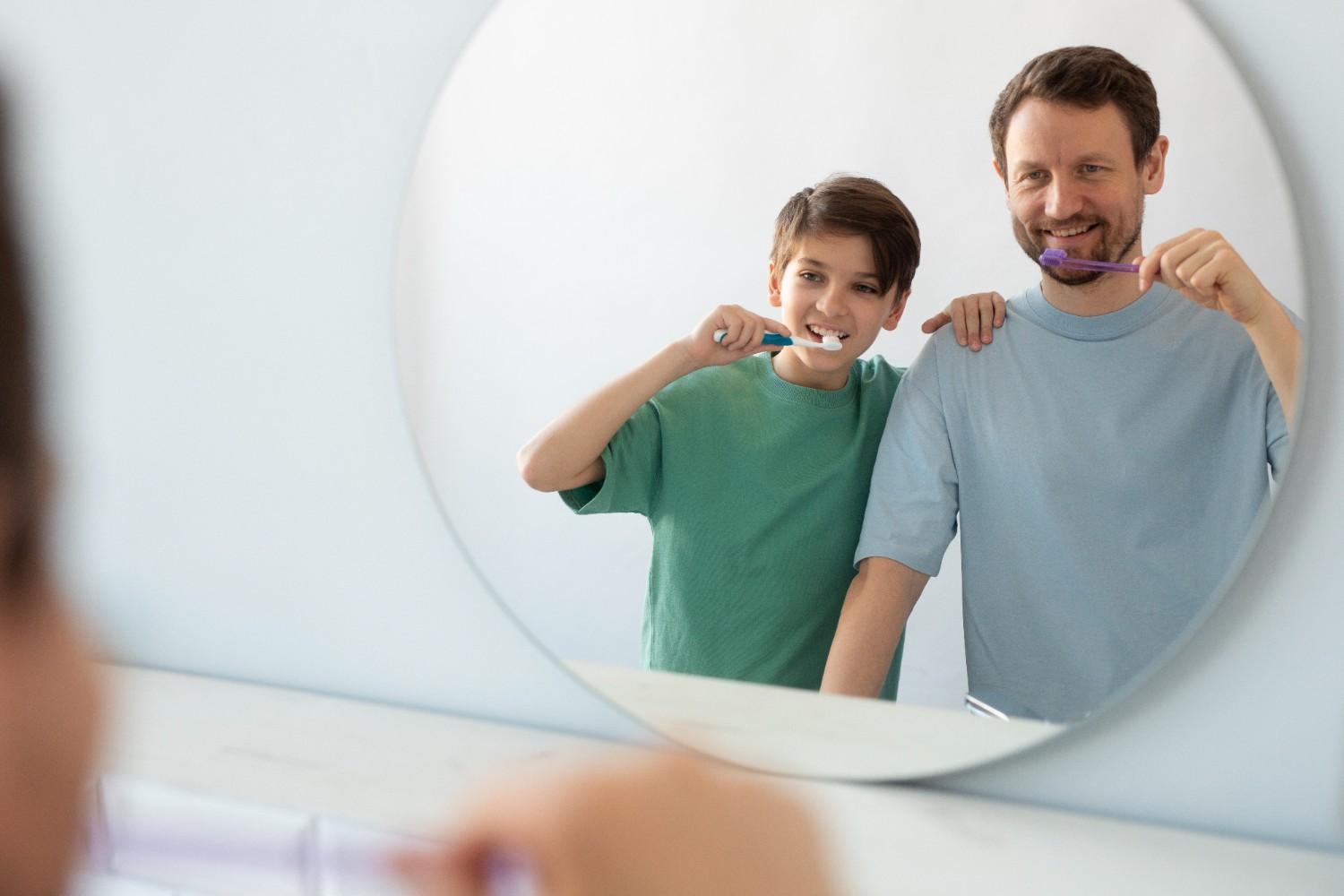
When parents brush alongside children, it models good habits, makes brushing social time, and allows children to watch and copy proper technique. Family brushing sessions feel less isolating than sending children alone to the bathroom and create accountability—everyone brushes together.
Setting up a consistent routine
Same time and place every morning and night builds automaticity—brushing becomes an unconscious habit requiring no decision-making. Morning brushing happens after breakfast, evening brushing happens before bedtime stories. Consistency removes negotiation and power struggles.
Establishing the Twice-Daily Routine
Morning brushing after breakfast
Brushing after breakfast removes overnight bacterial buildup plus food particles from the first meal. It also creates fresh breath for the school day. Some families prefer brushing before breakfast to remove overnight bacteria, then rinsing after eating—either approach works as long as you’re consistent.
Night brushing before bed is most critical
Evening brushing prevents bacteria from feeding on food residue and sugars during the overnight hours when saliva production decreases dramatically. Saliva naturally protects teeth, but this protection diminishes during sleep, making pre-bedtime brushing the most important session of the day.
Why consistency matters more than perfection
Missing occasional brushing sessions won’t ruin teeth, but irregular, unreliable habits create cumulative problems. Children who brush most mornings and most evenings develop far healthier teeth than those with sporadic, unpredictable care. Aim for consistency over occasional perfect sessions.
Making brushing non-negotiable
Frame brushing like seatbelts or holding hands in car parks—part of daily safety and health routine, not optional. When parents present brushing as negotiable or punishment-based (“no brushing, no bedtime story”), it becomes a power struggle. Non-negotiable routines don’t require discussion or bargaining.
Supervising Without Taking Over
The “you first, then me” approach
Let children attempt brushing first to practice and build skills, then parents follow up to ensure thorough cleaning. This approach respects children’s growing independence whilst guaranteeing effective cleaning. Children feel empowered by their turn, and parents know teeth are actually clean.
Standing behind or beside your child while they brush
Position yourself behind or beside your child rather than facing them—this gives you the same view of their mouth they have in the mirror, making it easier to spot missed areas and provide guidance. You can point out specific teeth or demonstrate technique from this vantage point.
Using a mirror so children can see what they’re doing
Mirrors help children see which teeth they’re brushing and whether they’re reaching all surfaces. Visual feedback improves technique faster than verbal instructions alone. Consider installing child-height mirrors or providing hand mirrors for young children.
Providing specific feedback
Instead of generic “good job,” offer specific observations—”I see you remembered the back teeth today” or “your circles are getting smoother” or “you covered all the outside surfaces—now let’s check inside”. Specific feedback teaches more effectively than vague praise.
Gradually reducing assistance as skills improve
As children demonstrate consistent proper technique, slowly reduce your follow-up brushing—perhaps doing abbreviated touch-ups rather than complete re-brushing. This gradual withdrawal of assistance builds confidence whilst maintaining quality results.
Knowing when children have sufficient motor skills
Fine motor development varies by child. As a rough guide, children who can competently tie shoelaces, write neatly, or button small buttons typically have the coordination for effective independent brushing. If your child struggles with these tasks, they likely need continued brushing supervision.
Addressing Resistance and Challenges
What to do when children resist brushing
Stay calm, avoid power struggles, and offer limited choices—”would you like to brush first or should I?” or “strawberry or bubblegum toothpaste tonight?” Choices provide control without allowing non-compliance. Making brushing fun rather than forced reduces resistance more effectively than threats or punishment.
Using positive reinforcement rather than punishment
Praise effort and improvement—”you brushed for longer today” or “you did a great job on the bottom teeth.” Positive reinforcement encourages repetition of desired behaviors, whilst punishment creates negative associations with brushing that persist into adulthood.
Breaking the task into smaller steps
For overwhelmed children, divide brushing into manageable chunks—brush just front teeth first, then sides, then back. Success with small segments builds confidence for tackling the full routine. Similarly, you might start with 60 seconds and gradually increase to two minutes.
Accommodating sensory sensitivities
Some children genuinely struggle with toothpaste flavors, bristle textures, or the sensation of brushing. Try different toothpaste flavors, extra-soft bristles, electric brushes that vibrate differently, or even brushing without toothpaste initially if texture is the issue. Sensory challenges are real and deserve accommodation rather than dismissal.
Managing the toddler who wants to do it themselves
Toddlers insist “me do it!” but can’t actually clean effectively. Solution: let them brush first until satisfied, then cheerfully say “now it’s mummy’s turn to make teeth super clean” and thoroughly re-brush. This respects their developmental need for autonomy whilst ensuring proper cleaning.
Dealing with older children who claim they don’t need supervision
Use disclosing tablets occasionally to reveal plaque they missed, showing objectively that their technique needs improvement. Spot-check periodically rather than hovering daily. Frame check-ins as “quality control” rather than lack of trust—even adults sometimes rush through brushing.
Teaching Children Why Brushing Matters
Explaining in age-appropriate language
Toddlers and preschoolers understand simple concepts like “brushing keeps teeth strong” or “cleans away sugar bugs”. School-age children can grasp explanations about bacteria, plaque, and how cavities form. Teenagers respond to information about fresh breath, attractive smiles, and avoiding painful, expensive dental procedures.
Using visual aids
Books, videos, or models showing how plaque damages teeth make abstract concepts concrete. Some dentists have demonstration teeth that show cavity formation, or apps with animations explaining bacterial processes. Visuals teach more effectively than verbal explanations alone for most children.
Connecting oral health to things they care about
Frame brushing benefits in terms children value—fresh breath for talking to friends, nice smile for photos, strong teeth for eating favorite foods, avoiding needles and drills at the dentist. Children care more about immediate, tangible benefits than abstract future health.
Letting children see consequences in safe ways
Disclosing tablets that stain plaque pink or blue make invisible problems visible without actual harm. Children see objectively where they missed spots and understand why technique matters. This hands-on demonstration teaches more effectively than lectures.
Emphasizing that brushing is self-care they control
Position oral hygiene as empowering self-care children control rather than a chore imposed by parents. “You’re taking care of your body” feels different from “you have to brush because I said so.” Autonomy-supportive language increases intrinsic motivation.
The Role of Regular Dental Visits
Six-monthly check-ups reinforce brushing lessons
Regular dental visits provide professional assessment of home care effectiveness and catch problems early before they require extensive treatment. Dentists see whether current brushing and flossing routines are working or need adjustment.
Dentists and hygienists provide professional demonstrations
Dental professionals demonstrate proper technique using age-appropriate language and tools children can practice with. Sometimes children accept instruction more readily from dentists than parents. Professional demonstrations reinforce lessons parents teach at home.
Professional cleaning removes buildup that home care misses
Even excellent home brushing and flossing don’t remove all plaque and tartar, particularly in hard-to-reach areas. Professional cleanings show children that everyone needs periodic professional support—their home care isn’t failing if the hygienist finds areas to clean.
Dental visits create accountability and motivation
Many children genuinely want to show their dentist clean teeth and hear praise for cavity-free check-ups. This external motivation supplements internal habits, particularly during ages when parental reminders lose effectiveness.
Access to Child Dental Benefits Schedule
Eligible Australian families with children aged 2 to 17 can access up to $1,158 in dental benefits over two years through the Child Dental Benefits Schedule. This covers check-ups, cleaning, fluoride treatments, and preventive care that support the brushing and flossing habits you’re teaching at home. Learn more about using the CDBS in Salisbury and who qualifies for benefits.
Special Considerations for Salisbury Families
Fluoridated water provides additional protection
Most Australian communities including Salisbury have fluoridated tap water that provides additional enamel protection beyond brushing with fluoride toothpaste. Encouraging children to drink tap water throughout the day supports the brushing efforts you’re teaching at home.
Local dental practices offering children’s education
Dental practices throughout Salisbury and northern Adelaide offer children’s oral health education, demonstrations of proper technique, and age-appropriate explanations that reinforce what parents teach at home. Professional support strengthens home habits.
Using the Child Dental Benefits Schedule for preventive care
The CDBS covers check-ups, fluoride treatments, and fissure sealants that work alongside home brushing and flossing to prevent decay. Take advantage of these benefits to provide comprehensive protection for developing teeth.
School dental health programs
Many South Australian primary schools offer dental health education programs that teach children about brushing and nutrition. These programs reinforce home lessons and provide peer-based motivation—children see classmates learning the same information.
When to Seek Professional Guidance
If your child has cavities despite regular brushing
Cavities in children who brush regularly indicate that either technique, frequency, or thoroughness needs adjustment. Your dentist can identify specific areas being missed and recommend modifications to your home routine.
Bleeding gums during brushing or flossing
Healthy gums shouldn’t bleed with gentle proper brushing or flossing. Bleeding may indicate technique problems—brushing too hard or flossing too aggressively—or early gum disease requiring professional attention and improved home care.
Persistent bad breath despite good oral hygiene
If your child has chronic bad breath even with regular thorough brushing, flossing, and tongue cleaning, it may signal dental problems like trapped food, cavities, gum disease, or even medical issues like sinus infections requiring professional evaluation.
Visible plaque buildup even after brushing
If you can see white or yellowish buildup on teeth shortly after your child brushes, either their technique is inadequate or they’re not actually brushing despite claiming they did. Disclosing tablets help identify missed areas, and your dentist can demonstrate proper technique.
Your child is significantly older than peers but can’t master independent brushing
Most children develop adequate brushing skills by age 8 to 10. If your child is significantly older but still struggles with coordination despite practice and instruction, discuss with your dentist whether developmental assessment or modified tools might help.
Building Lifelong Habits
The habits children form by age 10 typically persist
Research shows that oral hygiene habits established during childhood persist into adulthood. Children who grow up brushing twice daily and flossing regularly continue these habits as adults, whilst those with inconsistent childhood routines struggle to establish them later.
Consistent parental involvement creates adults who value oral health
Parents who prioritize and supervise children’s oral care communicate that dental health matters. This value system transfers to children who then prioritize their own oral care as independent adults and eventually teach their own children the same habits.
Celebrating milestones
Acknowledge achievements—first independent brushing, first self-flossing, cavity-free check-ups, mastering new techniques. Celebration reinforces that these skills and outcomes matter and are worth the effort required to achieve them.
Gradually transferring responsibility
The journey from parents doing everything to children managing independently happens gradually over years. Each small increase in responsibility—choosing toothpaste flavor, brushing first before parent follow-up, attempting to floss one tooth—builds towards full independence.
Modelling good oral hygiene yourself
Children copy what they see parents do more reliably than following what parents say. If you brush regularly, floss daily, and attend dental check-ups, your children absorb these behaviors as normal adult routines worth emulating.
Teaching your children to brush and floss properly is one of the most valuable life skills you can give them. The habits they form during childhood persist into adulthood, affecting their health, confidence, and quality of life for decades. For families in Salisbury, Paralowie, Parafield Gardens, and throughout northern Adelaide, Parabanks Dental provides comprehensive general dentistry services for children of all ages, including professional demonstrations of proper brushing and flossing techniques, personalized guidance based on your child’s specific needs, and regular check-ups that reinforce the habits you’re building at home. We understand that every child learns differently and faces unique challenges with oral care. If you’d like professional support teaching your children proper oral hygiene or want to ensure their current routines are effective, contact Parabanks Dental to schedule a family dental appointment.